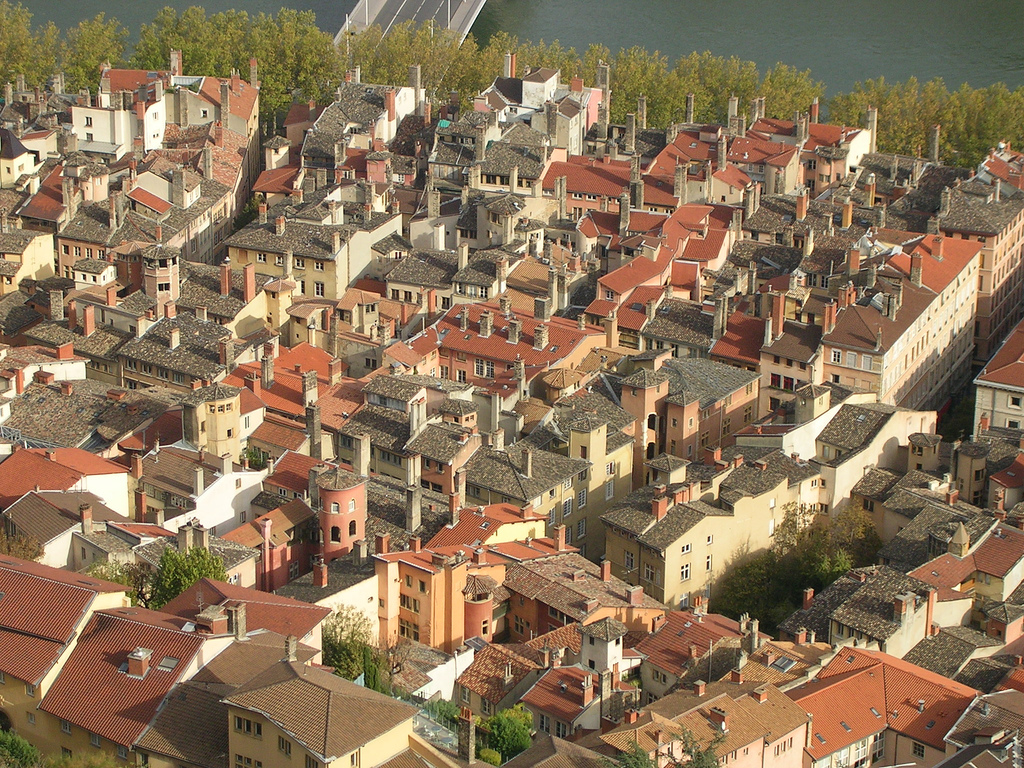
Lyon was the unfamiliar city in this set of journeys. My April 2026 visit gave me a reason to put aside the places I already know and enjoy the particular freedom of starting from scratch. With two days, the temptation is to reserve every famous table and fit the city into the spaces between them. I would reverse the scale of that ambition: two meals to look forward to, and enough walking that each neighbourhood becomes more than a restaurant address.
The Saône is a good first reference point. On one bank is Vieux Lyon; on the other, the streets of the Presqu’île. Farther up, Croix-Rousse adds a second sort of Lyon, with climbs, small squares and the history of silk working. You can understand quite a lot of the city by moving between these places slowly, then crossing the Rhône for lunch in the sixth arrondissement. April calls for a layer you can carry and a plan that survives a shower.
Choose your appetite
A bouchon meal deserves a little attention before you order. Lyonnais cooking can be generous, rich and very specific about the parts of an animal it uses. Read the menu, ask when something is unfamiliar and choose the dish you actually want to eat. There is no prize for ordering the most challenging speciality. A quenelle, a comforting plate with a sauce worth attending to, can be a much happier introduction than turning lunch into a test of bravery.
For the first day, Café Comptoir Abel gives the walk a clear destination at the southern end of the Presqu’île. For the second, Café du Peintre brings another expression of the city’s cooking, with Florence Périer’s menu and a wine selection connected to the surrounding regions. Its regular service is weekday lunch, which matters more to this plan than any romantic notion of wandering in whenever hunger strikes. Wednesday and Thursday work well as a starting pair.
Day 1The Saône, Abel and a view from Saint-Just
Begin with the Saint-Antoine–Célestins food market, along the Saône on the Presqu’île side. Walk its length before buying: vegetables, cheese, bread and flowers give you something more useful than a souvenir-shop introduction. This is a morning market, so arrive while shopping is still the point of being there. Keep breakfast light if you have booked Abel for lunch. Cross into Vieux Lyon for a look around the Saint-Jean streets, then return across the river and work south towards rue Guynemer. Lunch at Café Comptoir Abel should be the day’s centre of gravity. Leave an unhurried two hours; the afternoon can wait. Afterwards, make your way up to Saint-Just and the Jardin des Curiosités, at the end of place Abbé-Larue. Use public transport for the climb if that makes the day more pleasant. The viewpoint helps put the morning’s streets back into a whole city. Stay for a while, then descend at your own pace. A light supper is a perfectly good answer to a substantial lunch.
09:00–10:00 · Browse the riverside food market
Marché Saint-Antoine–Célestins
Quais Saint-Antoine and des Célestins, Lyon 2e
Usually Tuesday–Sunday mornings. Browse first, buy second, and leave room for lunch. Check the city’s current market information around holidays or works.
10:15–11:30 · A first walk through Vieux Lyon
Saint-Jean
Place Saint-Jean and nearby streets, Lyon 5e
Look beyond the main restaurant strip. Enter only courtyards or passages clearly open to visitors; people live and work behind these doors.
12:15–14:15 · Let lunch take its time
Café Comptoir Abel
25 rue Guynemer, 69002 Lyon
Book a table and read the current Lyonnais menu. This is Café Comptoir Abel on rue Guynemer, one of several Abel addresses in the city.
15:30–16:30 · See the city from Saint-Just
Jardin des Curiosités
Place Abbé-Larue, 69005 Lyon
Reach the garden via the end of the square. Allow time for the climb or use public transport; check park access before going.
Day 2Croix-Rousse, then a table in the sixth
Start on the Croix-Rousse plateau and work downhill, which is a kinder arrangement after yesterday’s lunch. The market along boulevard de la Croix-Rousse makes a useful morning anchor. Take time for the smaller streets and squares as you descend; the scale changes quickly between a broad boulevard and a stepped lane. The district’s silk-working history gives the tall buildings another layer to consider. Cross to the Brotteaux for a reserved lunch at Café du Peintre. Its menu gives you a chance to follow up on something you were curious about yesterday: perhaps a pike quenelle, perhaps another traditional dish, depending on the current card. Ask for a wine recommendation if you want one; a single well-chosen glass can be enough. For the afternoon, choose between staying on this side of the Rhône for a walk or returning to the lower Croix-Rousse slopes. If you choose the latter, Maison Cobalte on rue René Leynaud is a useful coffee and pause address, open from midday on its trading days. Do not hurry there just to complete the list. Sitting down because you have found a place you want to stay is a much better ending.
09:00–10:30 · Shop and wander on the plateau
Marché de la Croix-Rousse
Boulevard de la Croix-Rousse, Lyon 1er / 4e
Usually Tuesday–Sunday mornings. Browse the market, then take a gradual route down through the neighbourhood; there are hills and steps.
12:15–14:00 · Cross town for a proper Lyonnais lunch
Le Café du Peintre
50 boulevard des Brotteaux, 69006 Lyon
Reserve a weekday lunch. Allow transit time from Croix-Rousse. The restaurant lists regular lunch service Monday–Friday; do not assume a weekend or evening sitting.
15:30–16:15 · Coffee on the lower slopes
La Maison Cobalte
23 rue René Leynaud, 69001 Lyon
An optional return to the pentes after a Rhône-side walk. Closed Monday; opens at noon on trading days. A coffee break is enough if lunch was generous.
A city to leave room for
For a first stay I would choose accommodation on the Presqu’île or close to a useful metro connection, then spend the saved travel time on foot. Lyon has enough celebrated addresses to fill several visits, and the point of these two days is to begin a relationship with the city. One meal can make you curious about a dish; one hillside walk can make you want to come back to a neighbourhood.
Keep the final evening flexible. You might want another walk beside the river, a small plate somewhere near your hotel, or nothing more ambitious than an early night. I like leaving a first visit with one or two things still unresolved. In Lyon, deciding what to eat next is an especially good reason to return. Restaurant services, market days and garden access should be reconfirmed for the dates you copy into your own trip.